
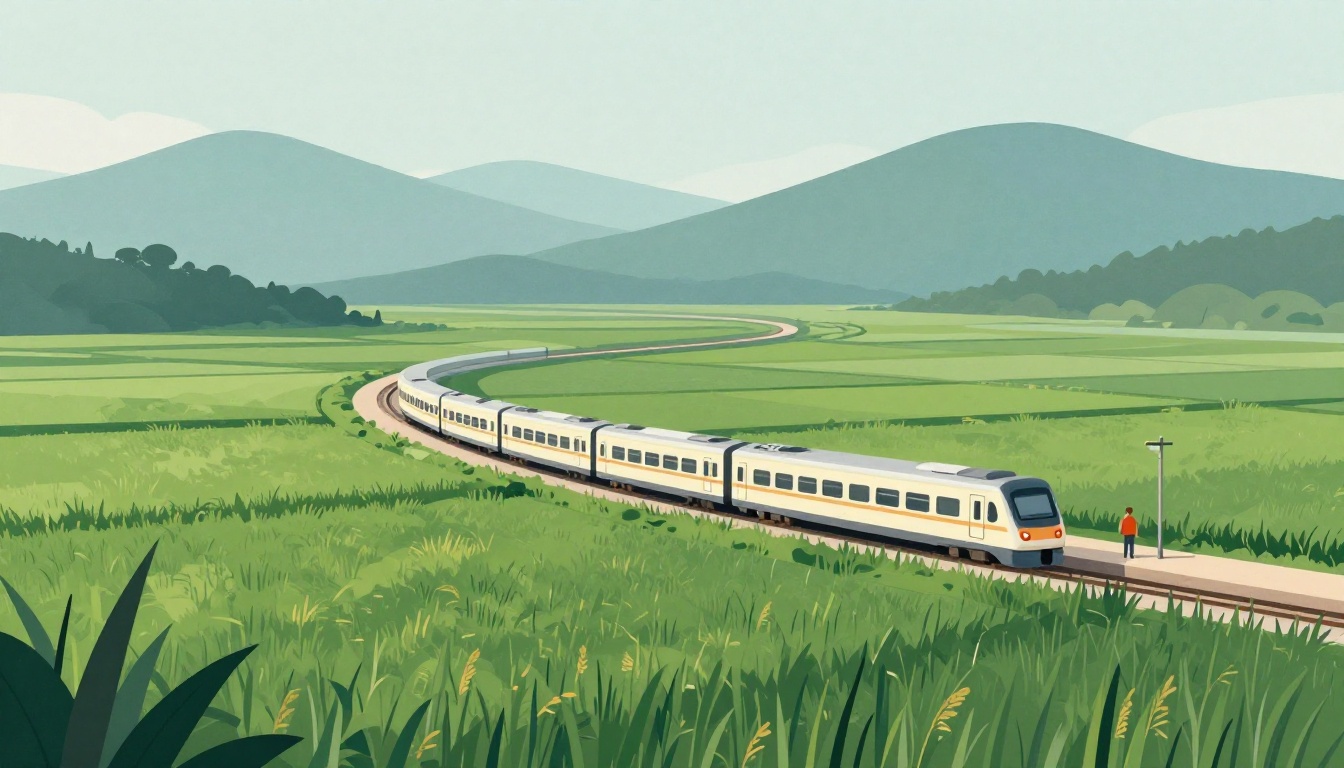
Planning a train-based trip through rural Japan can feel daunting when you're used to the constant hum of Tokyo's transit. The challenge isn't speed—it's the opposite. Rural lines run infrequently, sometimes with only a handful of trains per day, and missing one can leave you stranded in a small town with limited options. But with the right preparation, you can turn this into a rewarding slow-travel experience that connects you with landscapes and communities most visitors never see.
Japan's rail network is extensive, covering nearly every region from major cities to scenic countryside, and trains are safe, punctual, and reliable. However, rural lines operate on sparse schedules—for example, the Tadami Line in Fukushima runs only about seven trains per day, with gaps of up to two hours between services. This means planning ahead is not just helpful; it's essential.
What is a key characteristic of rural train lines in Japan that requires careful planning?
Select one answer.
Choose the right rail pass for your route
Before you book anything, decide whether a nationwide or regional pass fits your itinerary. The Japan Rail Pass offers unlimited travel on almost all JR trains nationwide, including bullet trains and limited expresses, for 7, 14, or 21 consecutive days. But since its 2023 price increase of up to 70%, it only pays off if you're covering long distances. For a focused rural trip, regional passes often provide better value.
Regional passes cover specific areas and are valid on JR trains within that region, with some even including non-JR lines and local buses. For example, the JR East Pass (Tohoku area) offers unlimited rides on JR East lines, including bullet trains, for 5 consecutive days—ideal for exploring the scenic northeast. The Hokuriku Arch Pass connects Tokyo to Kyoto via Kanazawa, giving access to the Japan Alps and rural Honshu. Other options like the Kansai Wide Area Pass or the Nagano & Niigata Area Pass cater to specific regions.
When choosing a pass, consider your route: if you're staying in one region, a regional pass is likely cheaper and more practical. If you're crossing the country, the nationwide pass might be worth it. Always check the coverage map and validity period—passes are valid for consecutive days only and cannot be split.
Master the art of rural train schedules
In rural Japan, trains and buses are rarely late, but the challenge is knowing when they arrive. With only a handful of departures per day, you need to plan your connections carefully. Use tools like Jorudan or Google Maps to check schedules in advance. Jorudan is often better at showing route options, while Google Maps excels at real-time bus connections.
A practical tip: always have a backup plan. If you miss a train, you might wait hours for the next one, and taxis can be expensive or unavailable. Carry a printed timetable or save offline maps, especially in areas with weak signal. Also, consider luggage forwarding—send your larger bags ahead to your next lodging so you can travel light on rural trains, which often have limited storage space.
Pick scenic lines that reward slow travel
Rural train lines are not just transportation; they're destinations in themselves. The Tadami Line in Fukushima winds through dramatic river valleys and is famous for its stunning scenery, especially in autumn and winter. The Gono Line hugs the Japan Sea coast, offering spectacular ocean views. In Hokkaido, the Senmō Main Line runs along the Sea of Okhotsk between Abashiri and Shiretoko-Shari, with views of drift ice in winter.
These lines pass through rice fields, coastal cliffs, forests, and mountain valleys, providing a moving panorama of rural Japan. Stations and surrounding towns reflect local culture, with small museums, onsen (hot springs), and family-run eateries. Plan to get off at a few stops to explore—many towns have hidden gems like temples, shrines, or local markets.
Build a realistic itinerary
Start by choosing a region that matches your interests. For example, the Hokuriku region offers access to Shirakawa-go, Takayama, and Kanazawa, all connected by regional passes. The Tohoku area is perfect for nature lovers, with the Tadami Line and the coastal town of Sendai as a base. Kyushu has its own scenic routes and a slower pace.
A sample 5-day itinerary using the JR East Pass (Tohoku area) might look like this:
- Day 1: Tokyo to Sendai by shinkansen, explore the city.
- Day 2: Day trip to Matsushima and Yamadera, both accessible by local trains.
- Day 3: Take the Tadami Line from Aizu-Wakamatsu, stopping at scenic viewpoints.
- Day 4: Continue to Niigata, visit Sado Island via ferry.
- Day 5: Return to Tokyo, or extend to Aomori for the Nebuta Museum.
Remember to book accommodations in advance, especially in small towns where options are limited. Use platforms like Booking.com or Agoda, but also consider ryokan (traditional inns) for an authentic stay.
Pack for rural realities
Cash is essential in rural Japan—many small shops, vending machines, and even some restaurants don't accept cards. Bring enough yen for meals, tickets, and emergencies. Also, pack layers, as rural areas can be colder than cities, especially in mountains. An eSIM or pocket Wi-Fi is useful for navigation, but don't rely on it entirely; download offline maps and timetables.
Finally, embrace the unexpected. Rural Japan rewards patience and curiosity. A missed train might lead to a conversation with a local or a discovery of a hidden onsen. The goal is not to see everything, but to experience the rhythm of the countryside.
How the Featured Expert Can Help
Planning a rural Japan train trip can be complex, but you don't have to do it alone. Venture Hub Travel Agency specializes in thoughtful, conscious travel planning and itinerary design, focusing on meaningful experiences and responsible travel. They offer personalized guidance for travelers seeking grounded, culturally immersive journeys, helping you craft a route that aligns with your values and interests. Visit their website to learn more about their services.
Quiz
What is a key characteristic of rural train lines in Japan that requires careful planning?
- They run infrequently, sometimes with only a handful of trains per day.
- They are always crowded and require reservations.
- They only operate during daylight hours.
Correct answer: They run infrequently, sometimes with only a handful of trains per day.