
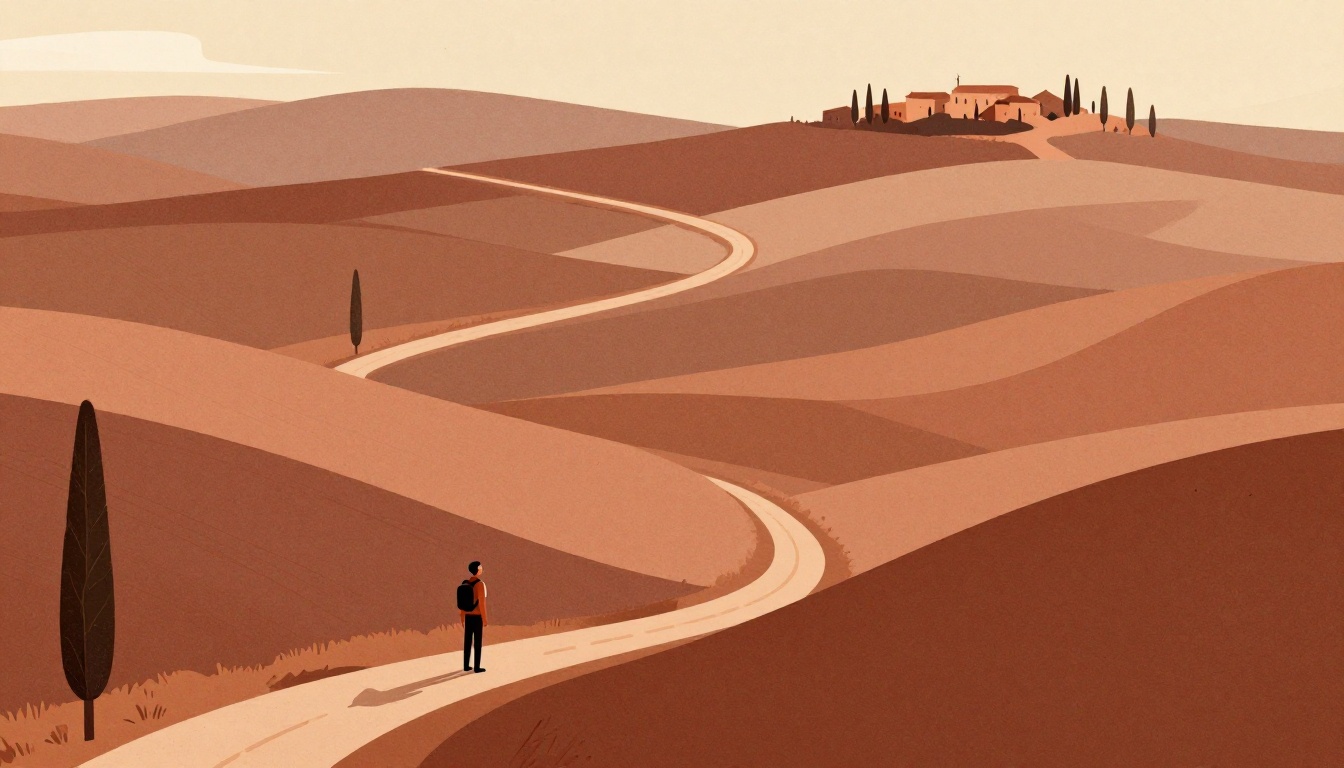
You've decided to slow down and truly experience a place, but now you're staring at a blank map of an entire region—Tuscany, Provence, or the Cotswolds—and wondering how to turn that into a realistic, unhurried itinerary. The challenge isn't finding things to do; it's choosing what to leave out and how to structure your time so you don't end up rushing from one hill town to the next. This guide gives you a practical, step-by-step method for planning a slow travel itinerary that keeps you rooted in one region, with plenty of room for spontaneity and genuine connection.
What is a key principle of slow travel itinerary planning?
Select one answer.
Start with your 'why' and your must-sees
Before you plot any routes, ask yourself why you chose this region. What sparked your interest? According to slow travel experts, jotting down your must-sees and understanding the reasons behind your destination choice is the first step in designing a meaningful itinerary. This isn't about checking boxes; it's about identifying the experiences that matter most to you. For example, if you're drawn to Tuscany for its hill towns, your must-sees might include Siena and San Gimignano. If it's the wine, you'll focus on Montalcino and Montepulciano. Write these down, and then check the opening hours for any museums or attractions—many are closed on random days, and you don't want to discover that on your last day.
Choose a home base and limit your moves
Slow travel thrives on stability. Instead of booking a new hotel every night, pick one or two home bases within the region and take day trips from there. This reduces packing time, lets you build relationships with local shopkeepers, and gives you a sense of coming home each evening. For a region like Tuscany, a 10-day itinerary split into 7 days in the countryside (e.g., Val d'Orcia, Siena, San Gimignano) and 3 days in Florence is a proven structure that keeps driving efficient and avoids backtracking. Similarly, Rick Steves recommends a two-week Tuscany trip that uses Florence, Siena, Montepulciano, Volterra, and Lucca as bases, with day trips to nearby towns. The key is to minimize transit time and maximize your time actually being somewhere.
Leave a lot of time open
One of the most common mistakes in itinerary planning is over-scheduling. Slow travel is about leaving room for spontaneous, interesting experiences to fit into your day. As one slow travel guide advises, "Leave a Lot of Time Open." This means not planning every moment of every day. Instead, structure your days around one or two anchor activities—like a morning market visit or a hike—and leave the afternoons free for wandering, a long lunch, or a nap. This flexibility also allows you to change your plans if you discover something unexpected, like a local festival or a hidden viewpoint.
Use local transport and walk when possible
To truly slow down, embrace the region's local transport. In Tuscany, for example, Florence, Pisa, Lucca, and Siena are readily linked by public transportation, but the smaller hill towns are more of a challenge. Plan on using a mix of trains and buses, and allow more time in your itinerary—bus service can be spotty on weekends. Walking is also a key part of slow travel. Instead of driving between towns, consider hiking a section of a trail or simply strolling through a village's backstreets. This not only reduces your environmental impact but also allows you to notice details you'd miss from a car window.
Find a grocery store and cook a meal
A practical tip from slow travel veterans is to find a grocery store early in your stay. This does two things: it saves money on eating out for every meal, and it gives you a glimpse into daily life. Shopping for local produce, cheese, and bread, and preparing a simple meal in your rental apartment, is a deeply immersive experience. It also forces you to slow down and savor the moment, rather than rushing to the next restaurant on your list.
Don't be scared to change your plans
Slow travel is a mindset, not a rigid schedule. If you fall in love with a town and want to stay an extra day, or if you're exhausted and need a rest day, give yourself permission to change your plans. As one guide notes, "Don't Be Scared to Change Your..." plans. This flexibility is what makes slow travel so rewarding. It's about responding to your own needs and the rhythm of the place, rather than adhering to a pre-set checklist.
A sample slow travel framework for one region
Here's a simple framework you can adapt to any region:
- Choose your region and season. Consider the climate, crowds, and local festivals.
- List your must-sees and must-dos. Be realistic about what you can fit in without rushing.
- Select 1-2 home bases. Look for towns that are well-connected and have a good range of accommodation.
- Plan day trips, not daily moves. Each day, pick one destination or activity, and leave the rest of the day open.
- Book accommodation with a kitchen. This allows for grocery shopping and home-cooked meals.
- Learn a few local phrases. This helps you connect with locals and navigate daily interactions.
- Build in rest days. Plan for at least one day every 3-4 days with no agenda at all.
By following this framework, you'll create a slow travel itinerary that feels less like a checklist and more like a way of living in a place, even if only for a week or two.
How the Featured Expert Can Help
Planning a slow travel itinerary can be overwhelming, but you don't have to do it alone. Venture Hub Travel Agency specializes in thoughtful, conscious travel planning and itinerary design, focusing on meaningful experiences and responsible travel. Their personalized guidance helps travelers seeking grounded, culturally immersive journeys—exactly the kind of trip this article describes. Visit their website to learn how they can help you craft a slow travel experience that protects what matters.
Quiz: Test your slow travel planning knowledge
Question: What is a key principle of slow travel itinerary planning?
- A: Book a new hotel every night to see more places.
- B: Leave a lot of time open for spontaneous experiences.
- C: Plan every moment of every day to maximize efficiency.
Correct Answer: B