
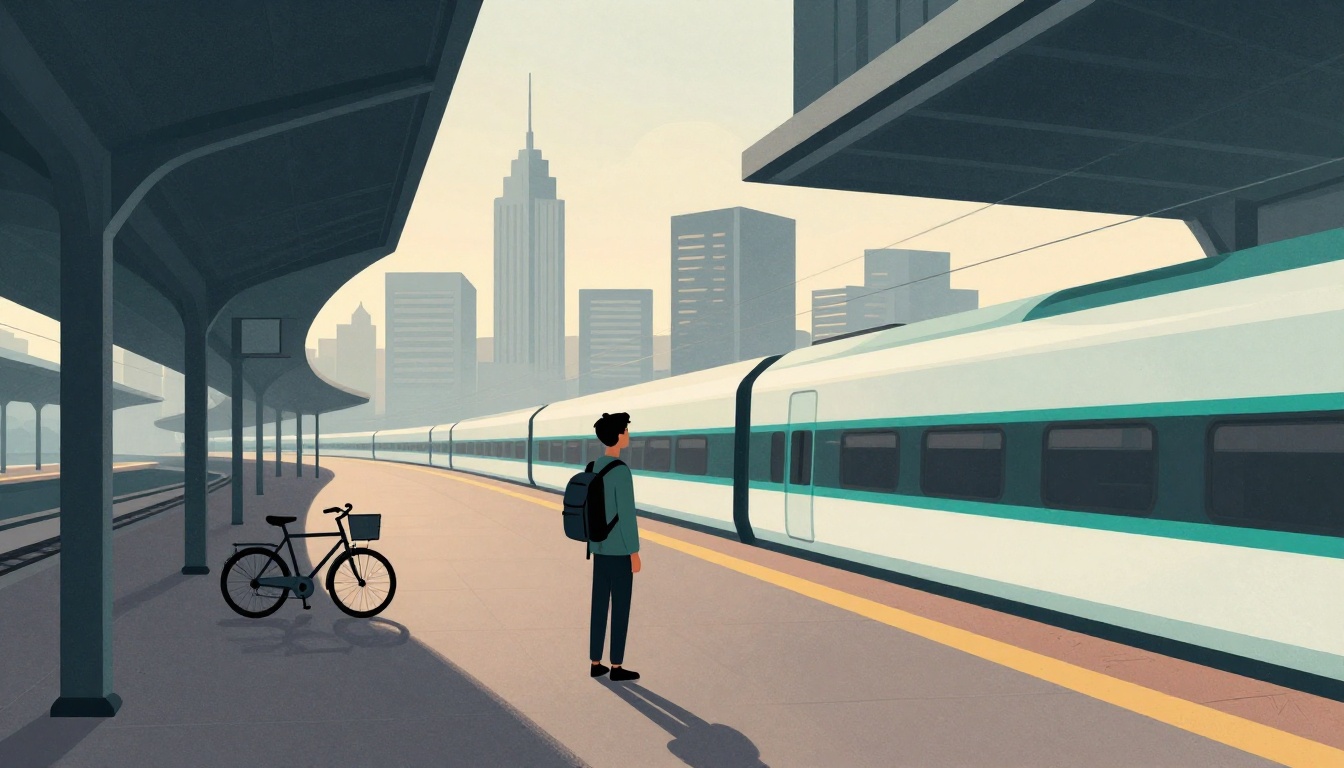
Roughly how much can taking the train instead of flying cut emissions on a short journey where both are realistic options?
Select one answer.
Start with the journey, not the itinerary
Most city-break emissions come from getting there, not from what you do once you arrive. So the single highest-impact decision you make is your transport mode. For short journeys where both options exist, taking the train instead of flying typically cuts emissions by around 85% to 95%, according to C Level's comparison of rail and air travel.
Concrete figures make this easier to plan around. A London-to-Edinburgh trip produces roughly 12.5kg CO2e per passenger by train versus 165.1kg by plane, and London to Paris comes out at about 2kg CO2 by rail against 61.5kg by air. The BBC's breakdown of fly, drive or train reaches the same conclusion: a London-to-Madrid journey emits about 43kg of CO2 per passenger by train but 118kg by plane.
If a train isn't realistic, the next-best option is usually a bus or coach, and then a shared car. Driving alone is rarely better than rail, but a car with three or four people can be a relatively low-carbon choice compared with flying, as Travel & Climate's transport comparison explains.
Choose a destination that's already working on sustainability
Not all cities are equal. Some have made genuine, measurable commitments to reducing their footprint, which makes it easier for you to travel lightly once you're there. Look for cities with strong public transport, extensive cycling infrastructure, and pedestrian-friendly centres.
A few well-documented examples include Copenhagen, which has pledged to become carbon-neutral and where over half of residents cycle to work, and Ljubljana, which earned the European Green Capital award and has introduced a zero-waste initiative. National Geographic's beginner's guide to sustainable travel also highlights Bristol, Angers, Nantes, Zurich and Ljubljana as strong choices for a green break.
Book accommodation with verifiable credentials
Where you sleep shapes your trip's impact and where your money lands. Look for certifications such as Green Key, EarthCheck, B Corp or Green Globe, which indicate a property is reducing energy use and emissions and treating its people well. Ask the property directly what earned them the badge — you'll quickly sense whether it reflects real practice.
Smaller, locally owned hotels and guesthouses often keep more of your spending in the community than large chains. Prioritise places that are walkable or transit-accessible from the centre, so you're not relying on taxis.
Slow down and stay longer
A rushed city break concentrates your impact and your spending into a few crowded hotspots. Staying longer in one place, and leaving room for an unplanned afternoon, spreads your impact more thoughtfully and supports a wider range of local businesses. ToursByLocals' sustainable itinerary guide makes the case simply: slow the pace, stay longer in one place, and travel outside peak season.
Off-season travel also eases pressure on destinations that see most visitors crammed into a short window each year.
Explore beyond the centre
Step just outside the main tourist zones. Neighbourhoods beyond the centre tend to have independent shops, everyday cafés and markets that serve residents rather than visitors. Spending time there spreads tourism's benefits more widely and gives you a fuller sense of the place.
Get around on foot, bike and public transport
Once you're in the city, the lowest-impact options are usually the most enjoyable. Walking and cycling let you notice details you'd miss from a taxi. Many cities now have bike-share schemes and apps that map optimised routes. Public transport is almost always preferable to ride-hailing for both emissions and local economic benefit.
Eat and shop local
Choose independent, locally owned restaurants and markets over international chains. Look for seasonal, locally sourced menus. This keeps money in the local economy and typically means less food miles and packaging.
A quick pre-trip checklist
- Compare train, bus and flight emissions before booking — rail usually wins on short routes.
- Pick a city with strong public transport and cycling infrastructure.
- Book certified or locally owned accommodation and ask what the certification means.
- Travel outside peak season and stay longer in one place.
- Plan to explore beyond the main tourist centre.
- Pack light — it makes walking, cycling and public transport easier.
- Budget for local, independent food and shops.
How the Featured Expert Can Help
Venture Hub Travel Agency offers thoughtful, conscious travel planning and itinerary design, focusing on meaningful experiences and responsible travel. The site promotes personalized guidance for travelers seeking grounded, culturally immersive journeys. You can explore their approach at Venture Hub Travel Agency.
Test your knowledge
Before you book your next city break, check whether you've absorbed the key fact about transport emissions.